
What Exactly Is Posthumanism?
At its core, posthumanism is a philosophical shift that challenges the traditional idea of what it means to be a human being. It moves away from “humanism”-the Renaissance-era belief that humans are the center of the universe and explores a future where technology, biology, and the environment are inextricably linked.
It generally splits into two main camps-
The Technological Shift (Transhumanism): This is the “upgraded” human. Think neural links, genetic engineering, and longevity treatments. It’s the idea that we can use science to transcend our current physical and mental limitations.
The Philosophical Shift (Critical Posthumanism): This is more about perspective. It asks us to stop viewing humans as superior to animals, AI, or nature. It’s an “all-together-now” approach to existence on Earth.
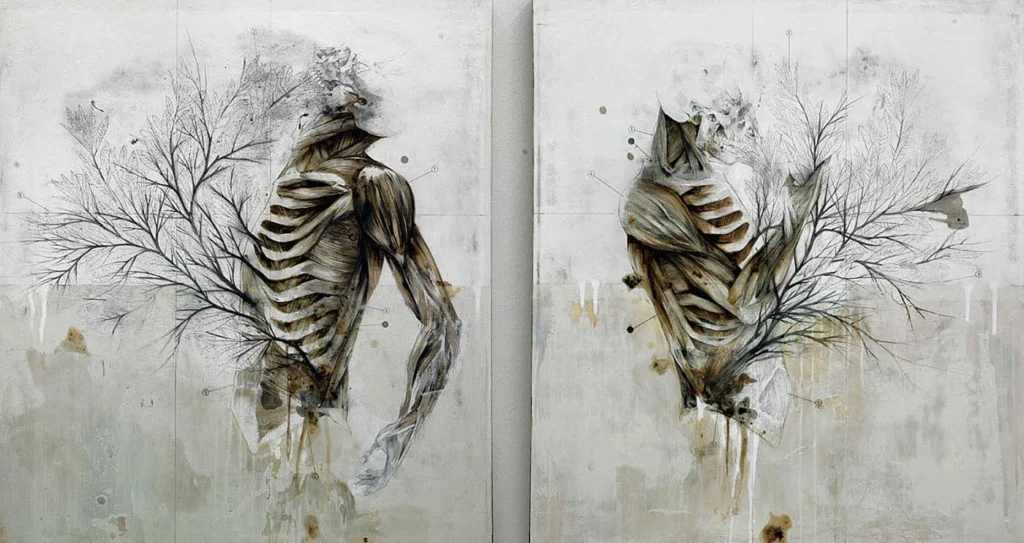
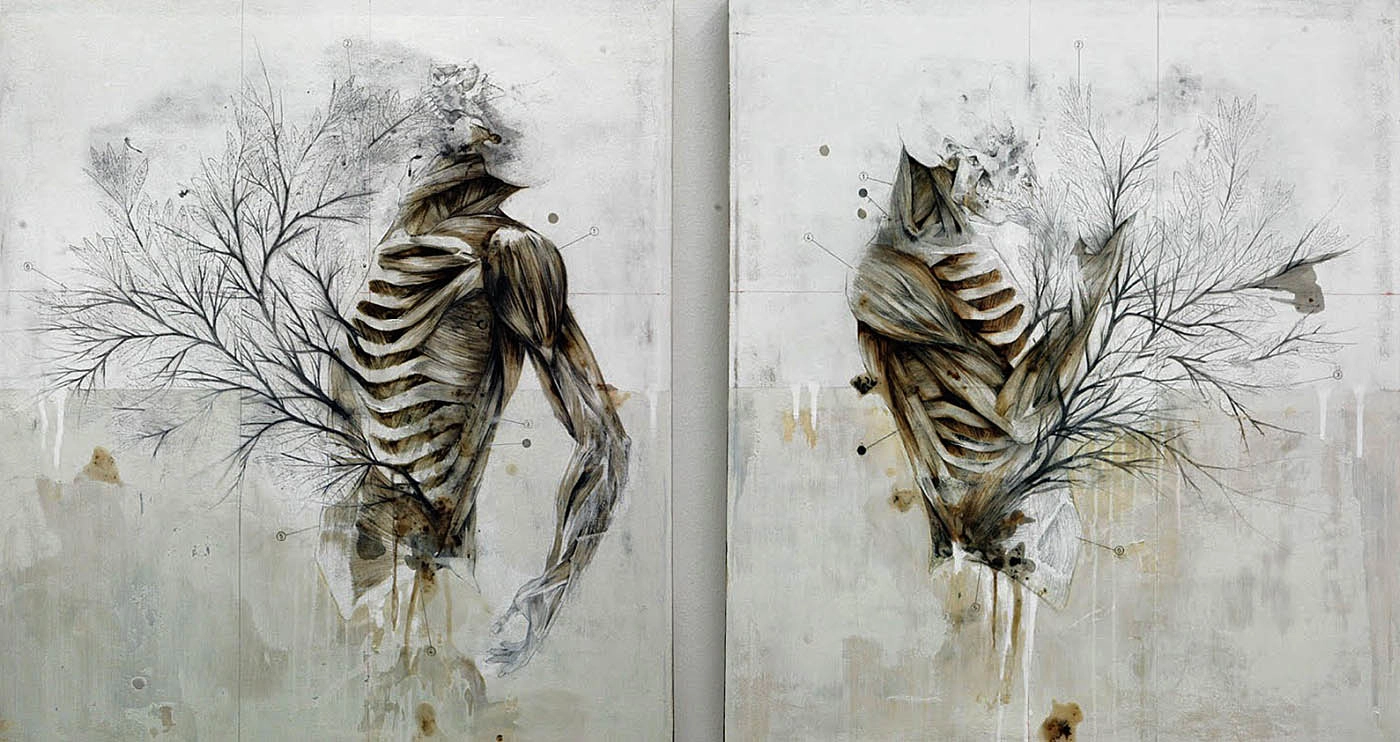
Herbivore / Erbivoro, Nunzio Paci, 2013, via artist’s website
| Name | Medium | Focus |
| Stelarc | Performance | Using prosthetics and VR to extend the human body. |
| Sandra Mujinga | Sculpture/Digital | Exploring Black identity and “spectral” bodies in digital spaces. |
| Sulemana Armiyaw | Sculpture | Reimagining race and identity through posthumanist forms. |
| Joanna Haynes | Collaborative | “Adventures in Posthumanism” through collective writing and mundane acts. |
In posthumanist art, the goal isn’t to tell a story about a person; it’s to create an encounter where the audience feels their connection to things that aren’t human. It’s the difference between watching a play about a forest and a play where the theatre is the forest, and you are part of the soil.