
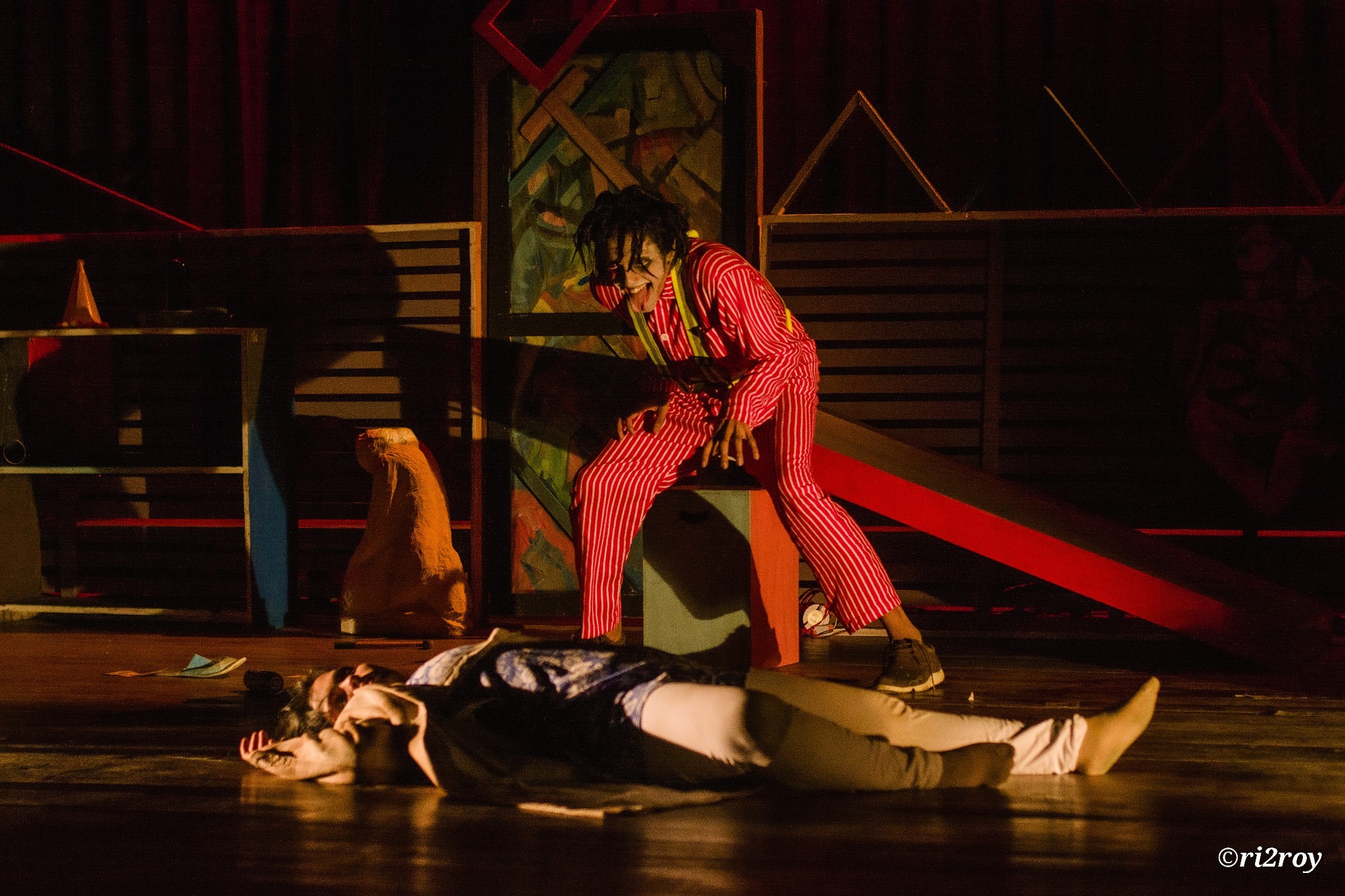
Moccqquarism (derived from the root words “Mock” or “Mocker”) is a contemporary theatrical theory and stylistic movement created by the Bangladeshi Theatre Director and researcher M. A. Samiiee. It is defined by a rebellious approach to traditional narrative hierarchy, primarily focusing on the interplay between the “serious” and the “trivial.”
“Moccqquarism is centered on trivializing serious subjects through jest and prioritizing the mundane.” …….M.A. SAMIIEE
“The Core Pillars of Moccqquarism in Theatre.”

- Trivializing the Grave (The “Mock” Element): Moccquarism takes subjects that are traditionally viewed with weight, fear, or reverence such as death, political authority, or existential crises and treats them with mockery or jest. By “mocking” these subjects, the movement seeks to strip them of their power to intimidate, exposing the underlying absurdity of reality.
- Prioritizing the Mundane: In a Moccqquarist production, the “least important” things are treated as the most vital. While major plot points might be ignored or pushed to the background, a mundane act like drinking tea, fixing a chair, or a repetitive trivial conversation is placed at the center of the performance and treated with intense seriousness.
Historical and Academic Context
- Inaugural Application: The theory was formally applied and debuted in Samiiee’s direction of Daniil Kharms’ play, Elizaveta Bam.
- Influences: While it shares aesthetic roots with Absurdism, Dadaism, and the Avant-garde, Moccqquarism is distinct because it uses jest specifically as a structural tool to deconstruct social and psychological tensions.
Why it is Unique?
Unlike pure satire (which mocks to correct behavior) or pure absurdism (which highlights the meaningless of life), Moccqquarism uses mockery as a way to re-order the world. It suggests that in the face of overwhelming or “serious” tragedy, the only honest and human response is to focus on the small, the trivial, and the ridiculous.
Moccqquarism vs. Absurdism
Absurdism, popularized by writers like Samuel Beckett, focuses on the meaninglessness of life and the futility of human effort. In contrast, Moccqquarism does not claim that life is meaningless. Instead, it suggests that life is a hierarchy that has been ordered incorrectly.
- Absurdism: “Nothing matters.”
- Moccqquarism: “The small things matter most, and the big things are a joke.”
Moccqquarism vs. Satire
Satire is a tool used to mock vice or folly with the intent of social correction or improvement. Satire has a moral goal. Moccqquarism, however, is not interested in correcting the subject it mocks. It mocks to deconstruct power. By trivializing the grave (like death or authority), it doesn’t try to “fix” them; it tries to make them less terrifying.
| Feature | Satire | Absurdism | Moccqquarism |
| Primary Goal | Social Correction | Highlighting Chaos | Re-ordering Hierarchy |
| Tone | Critical/Witty | Bleak/Existential | Mocking / Playful |
| Focus | Human Folly | Universal Silence | The Mundane / Trivial |
| Structural Tool | Irony | Repetition | Jest as Deconstruction |
Do You Read About Posthumanism?
Nice Things